Floating Blinds and Prairie Potholes Trip Report, 2026
Article and Photos by Jared Lloyd
There is a particular kind of chaos that comes with assembling floating blinds in a hotel parking lot for the first time. Cameras, waders, pontoon frames, zip-ties, camo netting, dry bags, and all sorts of other randomness spread across the pavement while passing guests slow their cars to stare. So, instead of parking lots, I take over conference rooms. Less wind. Less explaining to strangers. Fewer distractions. Easy access to coffee. And a large marker board for me to scribble out diagrams of the marsh and explain where birds will be, where they won't, and how to work this environment.
Our first day on the Prairie Potholes began the way all first days here begin: in the classroom. Before anyone wades into chest-deep water in the dark with thousands of dollars of camera gear lashed to a floating contraption, we talk. We talk about the landscape: what it is, how it came to be, why it matters. We talk about the species we're likely to encounter and the behavioral sequences that will tell you what a bird is about to do long before it does it. And we talk about fieldcraft, which is what the whole workshop is built around.
The Prairie Potholes Region is the most important wetland complex on Earth. It is also the most ecologically devastated landscape in the lower 48 states, with roughly 90% of its critical habitat already drained and converted for industrial agriculture. And yet it endures. These glacially-scoured basins pressed into the till of the Northern Great Plains still produce up to 80% of North America's waterfowl, 30% of all shorebirds on the continent, and serve as critical stopover for more than a billion migratory birds. That is not a typo. One billion birds. Understanding this is part of understanding why we are here and what it means to photograph in a place like this.
After the classroom session we assembled the blinds, drove down a winding two-track through the rolling prairie, suited up, and got everyone into the water for the first time. The first outing is always a little clumsy. There is a lot to take in: the sensation of moving through chest-deep water in waders, the disorientation of being so low to the surface, the challenge of navigating a new environment with a floating blind wrapped around you. I plan for that. The goal for the first time in the blinds is acclimation before I put people in front of birds. But by the time the light began to soften toward evening, participants were already working a hemi-marsh lined with cattails, yellow-headed blackbirds calling from the reeds all around them and blue-winged teal dropping in close.
Every year in the Prairie Potholes is different. Take the water levels. Last year when I arrived I found myself crawling more than wading. Then a storm rolled through and suddenly there was an extra three feet of water that drained into the slough and I could comfortably walk anywhere I wanted to go.
This year, the marsh I like to host my workshops in was sparser in vegetation than years past. Late season drought followed by a series of blizzards over the winter had given the place a bit of a haircut. Actually, it was more like male pattern baldness with a distinct patchiness to the place. Areas that I once posted up with my blind and used as a pinch point to funnel birds to within feet of my lens were wide open and I could see for fifty yards around me.
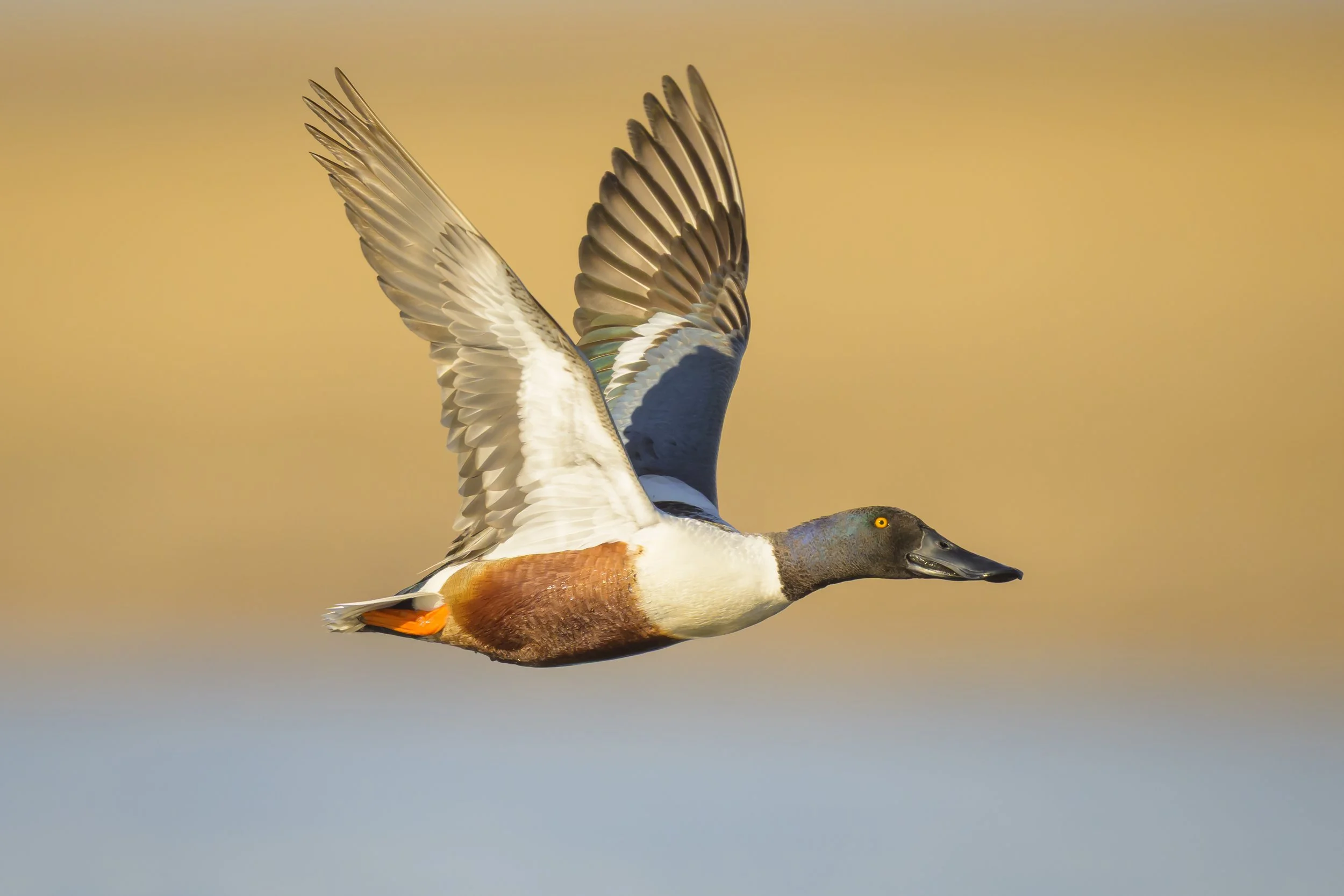
Apparently, this created a veritable Shangri-La for the dabbling ducks. The northern shovelers were in numbers I had never seen before. So too were the redheads and gadwalls. The blue-winged teal were out in force as always and one participant said she never needed to photograph another one of these birds for the rest of her life. And this year produced far more northern pintails than I had seen and photographed in the Prairie Potholes, which is a good thing given that their numbers are down 41% over the last couple of decades.
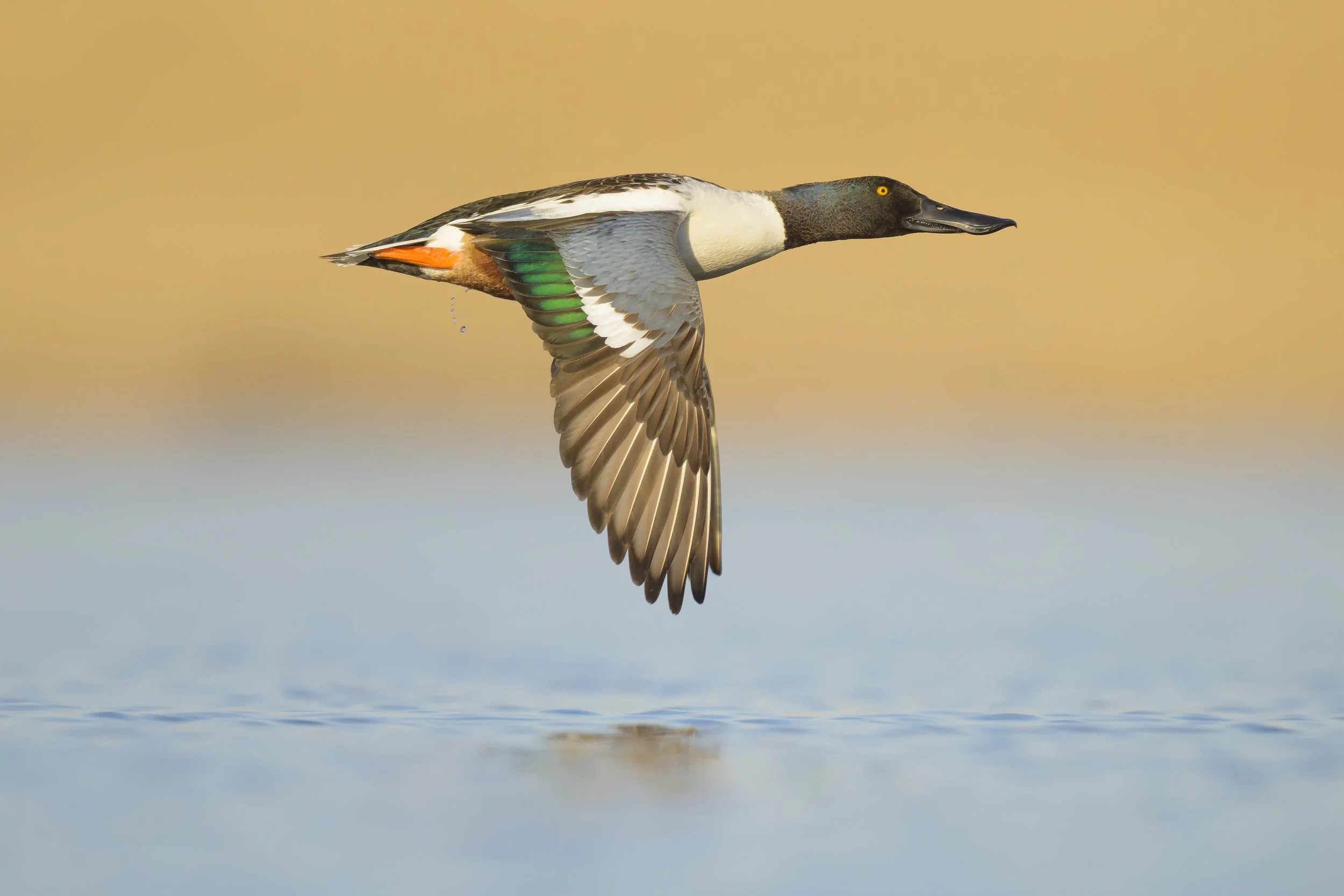
This is the nature of the beast. The productivity of the Prairie Potholes Region is hinged upon unpredictability and variability. A pothole that dries up in a drought with cracked mud exposed for months on end resets the entire stage of success in the pond. When it refills, there is an explosion of life that more permanent bodies of water could never be compared to. Life responds accordingly.
This ecosystem thrives on chaos. When blizzards rearrange a semi-permanent slough or hemi-marsh, life adapts. When prairie fires sweep across the sea of grass, the following year is almost guaranteed to offer some of the most productive bird photography of your life. When change happens, some species are impacted negatively while others experience it as a windfall. This is why protecting the full spectrum of biological diversity matters as much as it does.
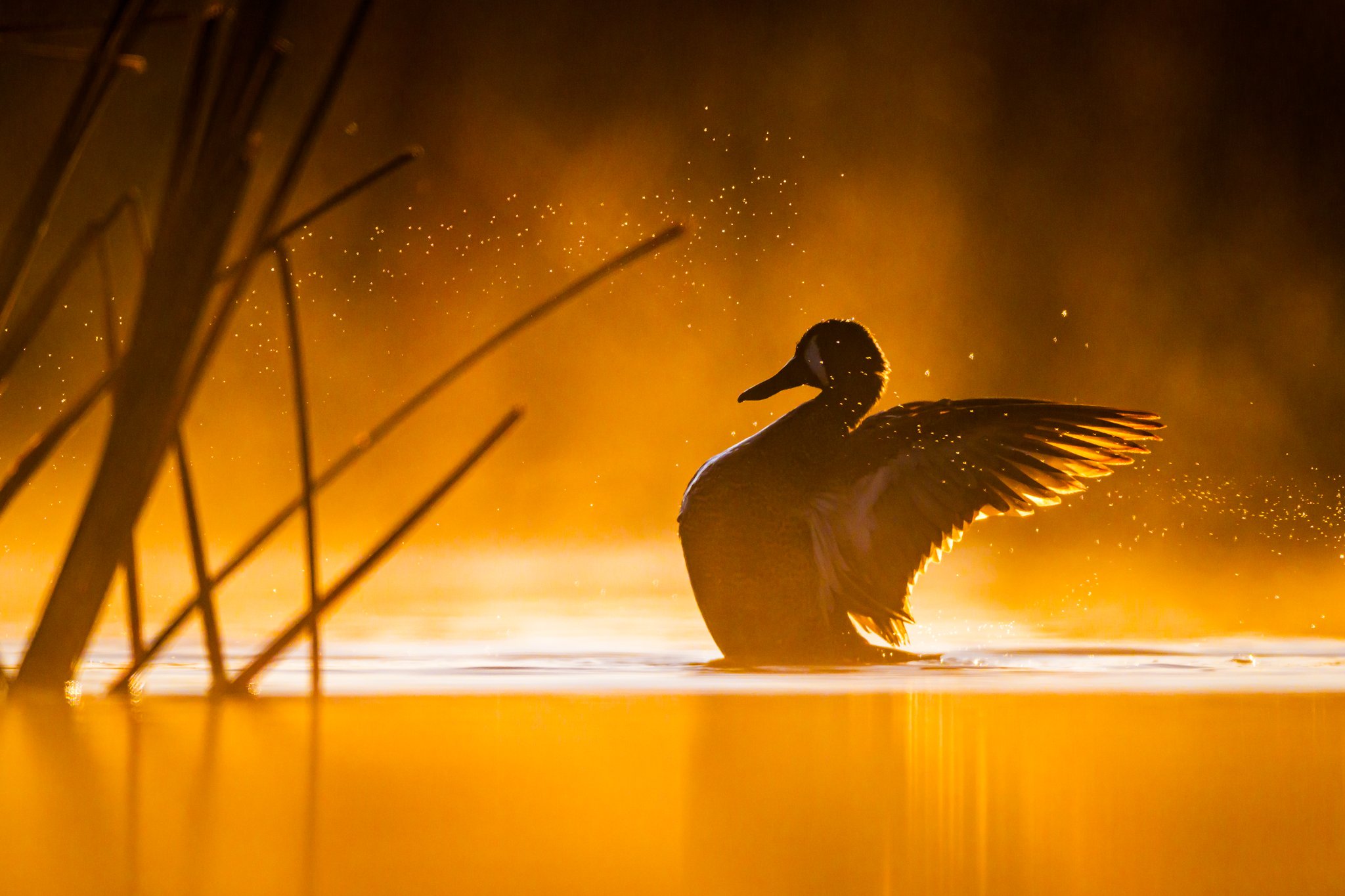
Radiation fog, or what most people just call ground fog, was a persistent theme in the mornings for the first half of the month. When air and water are dramatically different in temperature, a low layer of fog develops. When you first experience this while donning chest waders at dawn with your lens only a few inches above the surface of the water, it can be both disorienting and a lesson in frustration. Naturally this is the moment a beautiful drake pintail swims to within feet of your blind, with the kind of background and light you have been dreaming about. But fog softens all.
That is until you learn to turn around and look into the rising sun.
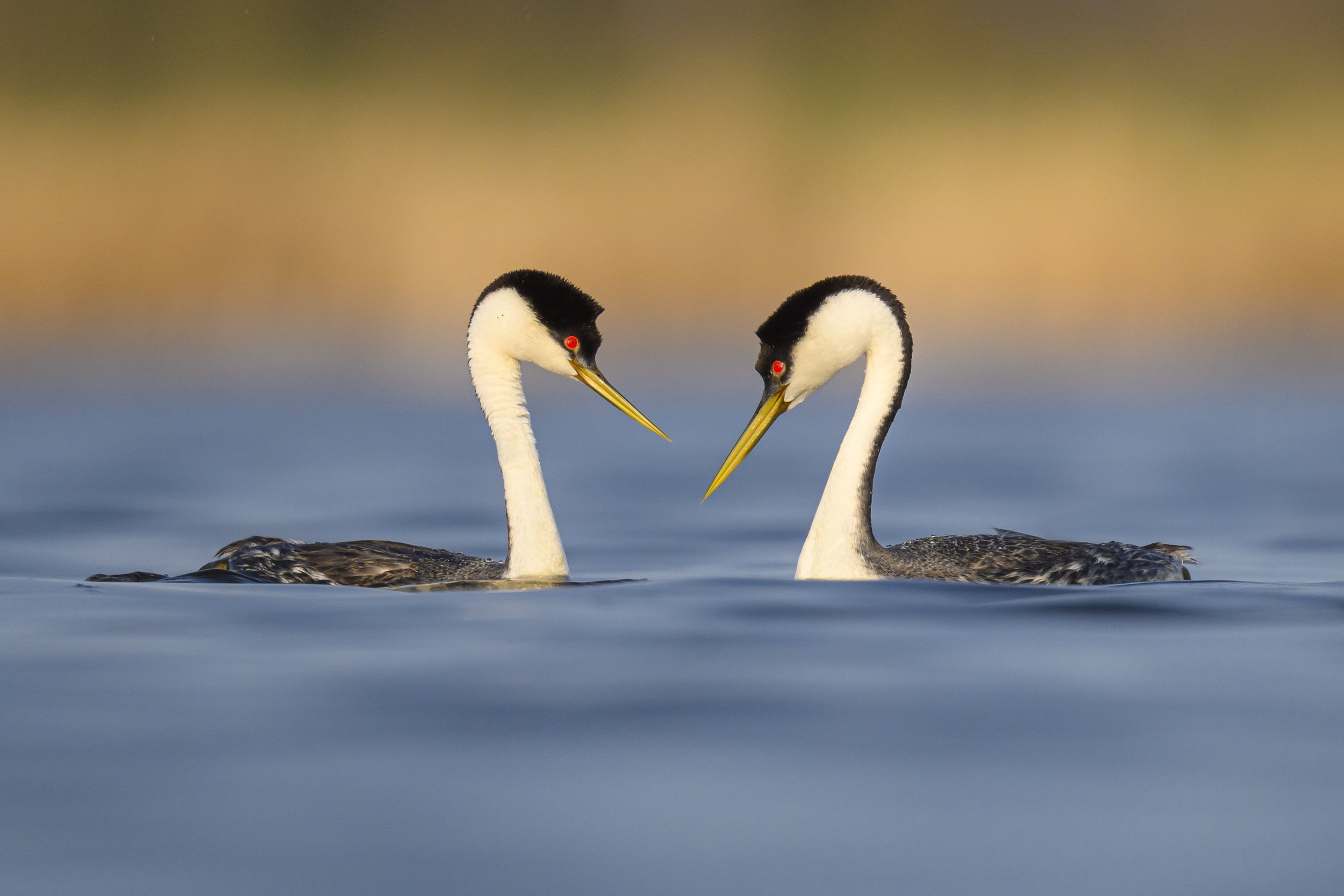
Silhouettes have more contrast, and contrast is what allows autofocus systems to lock onto our subjects. But more importantly, early morning light beaming through ground fog can produce an otherworldly and ethereal quality that flat light simply cannot. I put together a few examples of this with blue-winged teal to show during our midday debrief. And the following morning, Marian, a doctor from the UK who had joined the workshop, embraced the fog and silhouettes to capture one of the most beautiful photographs of a western grebe I have ever seen.
Wildlife photography is all about being able to recognize the potential in any situation. And fieldcraft is what it takes to move, change positions, anticipate behavior, and work with the shifting elements of a scene that really matter: light, background, and composition. Whether it is overcast or full sun, rain or ground fog, our job is to understand how constantly changing conditions create new and different opportunities.
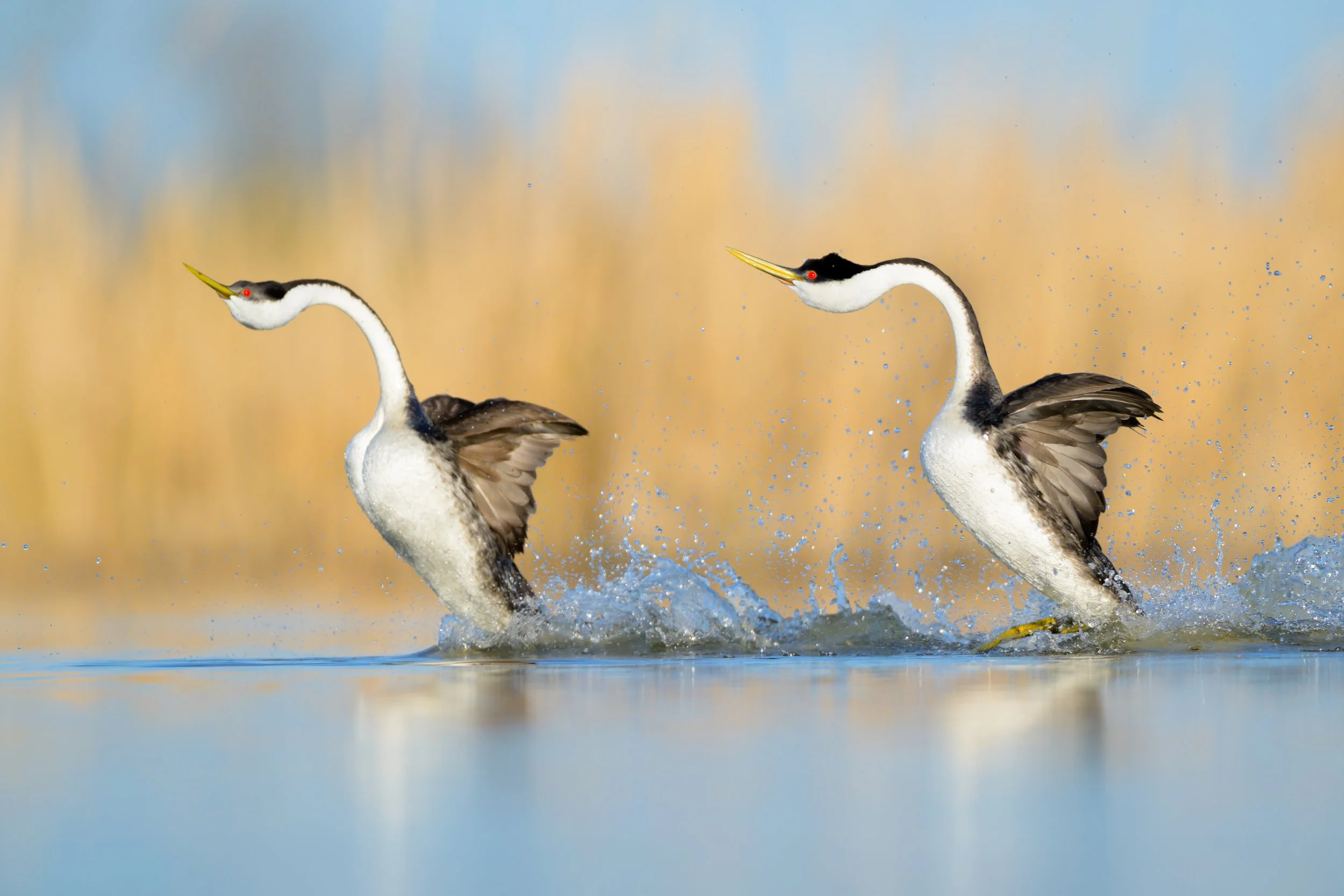
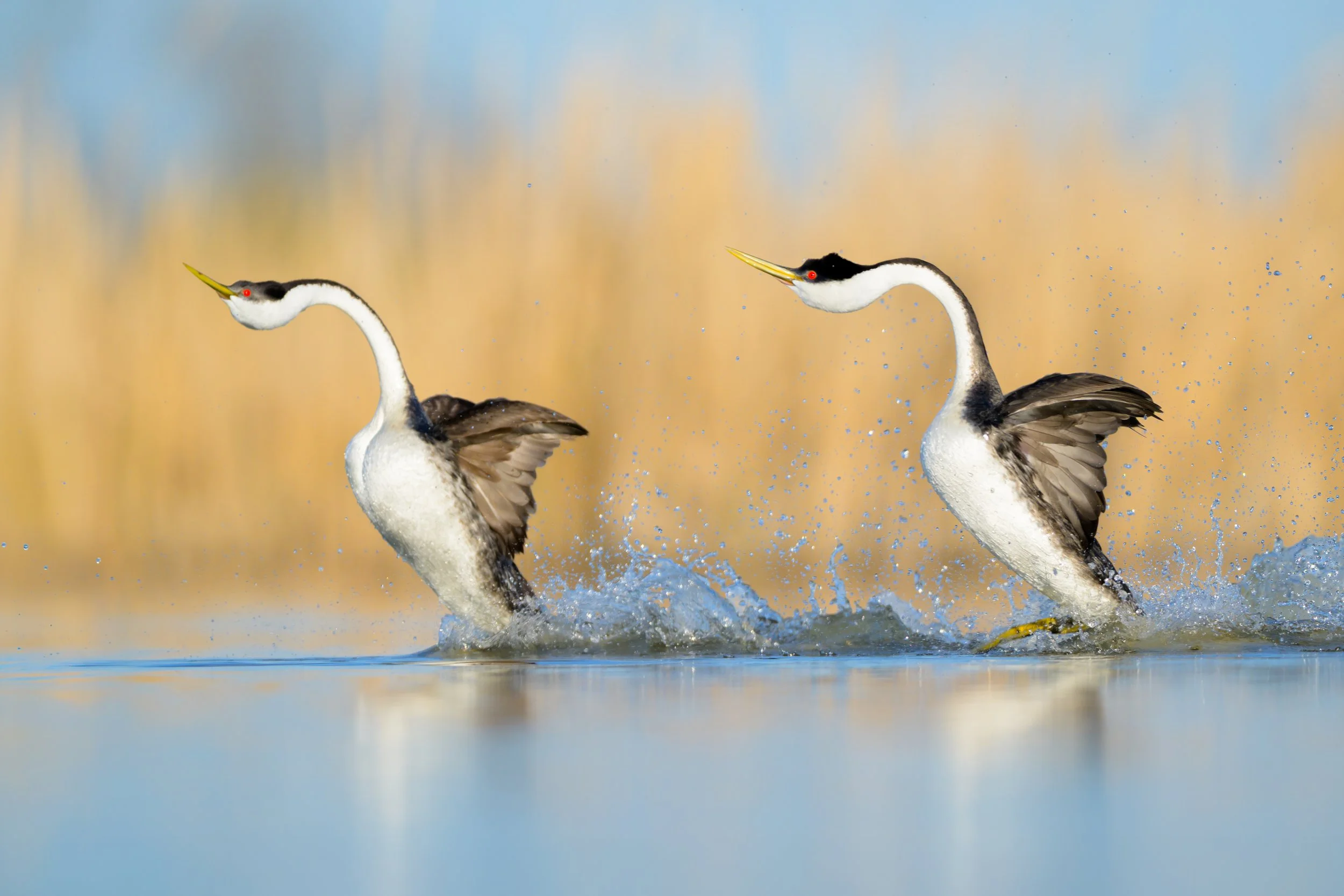
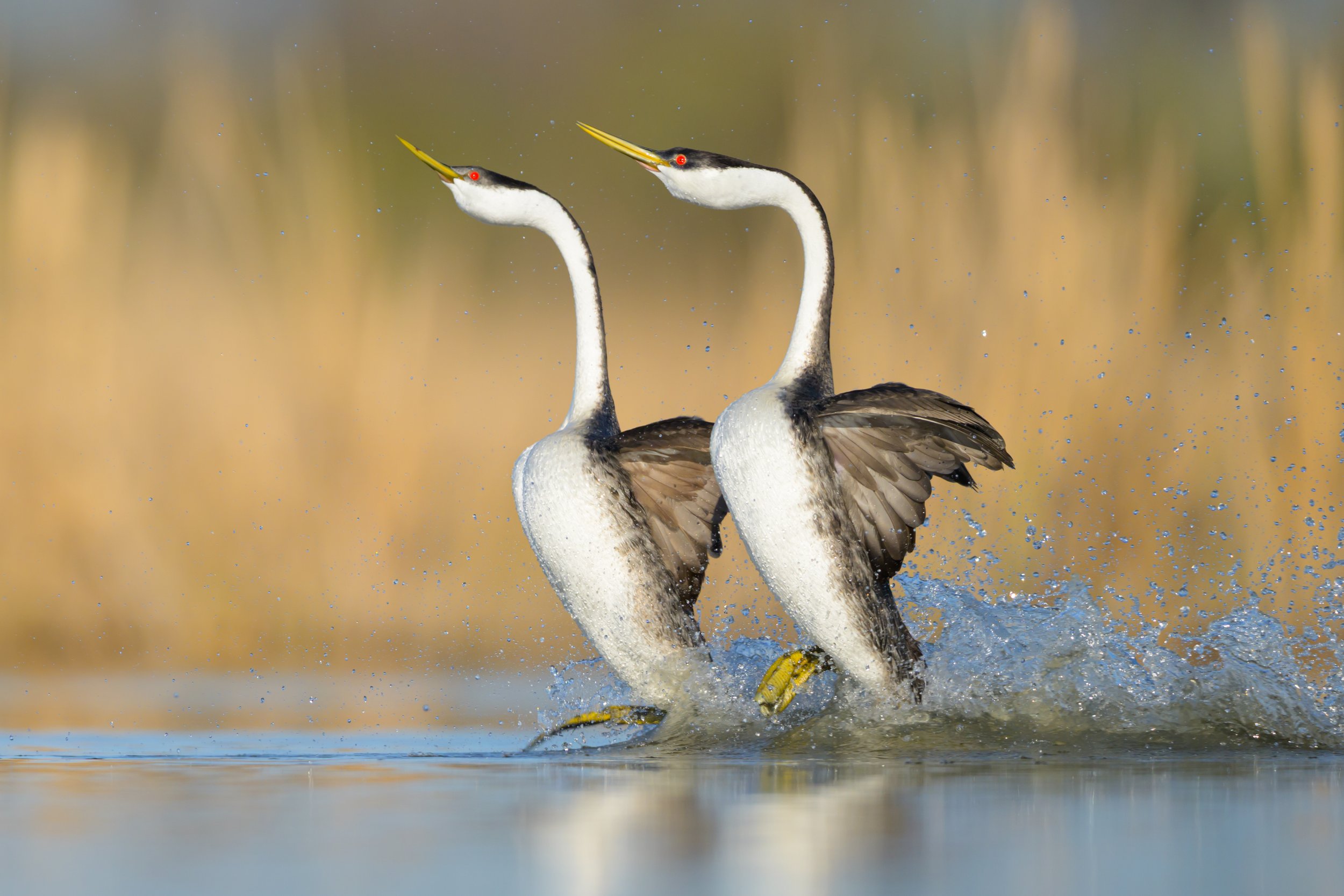
The thing that everyone wants to see and experience and photograph here is, of course, the rushing ceremony of the western grebes. It begins with a ratchet call of a unmated individual, searching the marsh for love. It’s sharp, mechanical, two-syllable, and unmistakable. We talked at length about this, what it means, where it all will happen, and why. Understanding this simple sound changes everything.
The behavioral sequence leading up to a western grebe rush is predictable once you know what to look for. The ratchet call. The bill dipping between a potential pair. And finally ratchet pointing: a low, forward posture where both birds drop their necks barely above the water, crests raised, locked entirely on each other. Research puts the probability of a rush following ratchet pointing at ninety-six percent. That figure isn’t trivia. It is your margin of certainty. When two birds lock up like that in front of your lens, you aren’t hoping for something to happen. You are locked on waiting for something that is already in the middle happening.
The sound always registers for me before my brain catches up with the visual: that deck-of-cards like sound but blasted through a megaphone. Both birds explode out of the water and sprint across the surface at twenty steps per second for sixty feet. You have seven seconds from launch to plunge. If you know what to look for, it ends with one hundred and forty frames on the card.
We spent a lot of time discussing this type of thing. When we remove the obstacle of just trying to find and get close enough to work with animals – which was the point of the floating hides – we are able to then focus our attention on reading behavior and anticipating the types of photographs we want to create.
Wind is a constant condition on the Northern Great Plains.
At first glance, that seems like something that should completely shut down any possibility of creating good photographs from a floating blind. In general, we like to see wind below 5mph. At 10mph, we are looking for the leeward sides of the marsh, places that break the wind so we can work. At 15mph, whitecaps form. All the while, your lens is locked onto something that is a bit like a glorified pool raft bobbing up and down with every ripple that comes your way. Add to this the tent you are working from inside of, acting like a sail in the wind.
But the birds we are photographing are experiencing these same forces of nature. A duck floating in whitecaps is spending significant energy just to hold position. This is where understanding the biology of our subjects comes into play: how they react to changing weather, high winds, falling temperatures. When temperatures drop to 45 degrees or below, ducks are forced to eat almost continuously throughout the day to sustain themselves through metabolic burn. Understand this and you know where to find ducks on those days, whether dabbling or diving species. Likewise, when the wind kicks up, these birds seek out microclimates across the landscape. While open water may have whitecaps, the small open holes in the marsh created by the dining habits of muskrats, called eat-outs, offer both protection and glassy water.
On days when the wind was high, but the floating blinds were still manageable, we shifted our efforts to protected areas deep inside the marshes. Instead of being a last-ditch effort just to get people out to photograph, these opportunities concentrated big numbers of birds and some of the best portrait photography of the week occurred when both birds and blinds were forced into these eat-outs. Redhead drakes that had people trying to back up to get them into the frame. Eared grebes and muskrats literally trying to swim up inside the blinds. And amazingly both wood ducks and buffleheads appeared, birds desperately trying to make it past the treeless plains to the boreal forest ponds beyond, taking refuge alongside pintails and white pelicans.
Perhaps the most important skill needed for leading wildlife photography workshops is the ability to pivot. Sometimes the weather is simply beyond what is feasible. That happens in every ecosystem on Earth. Backup plans are always necessary. And this year, I did have to play that card on both workshops.
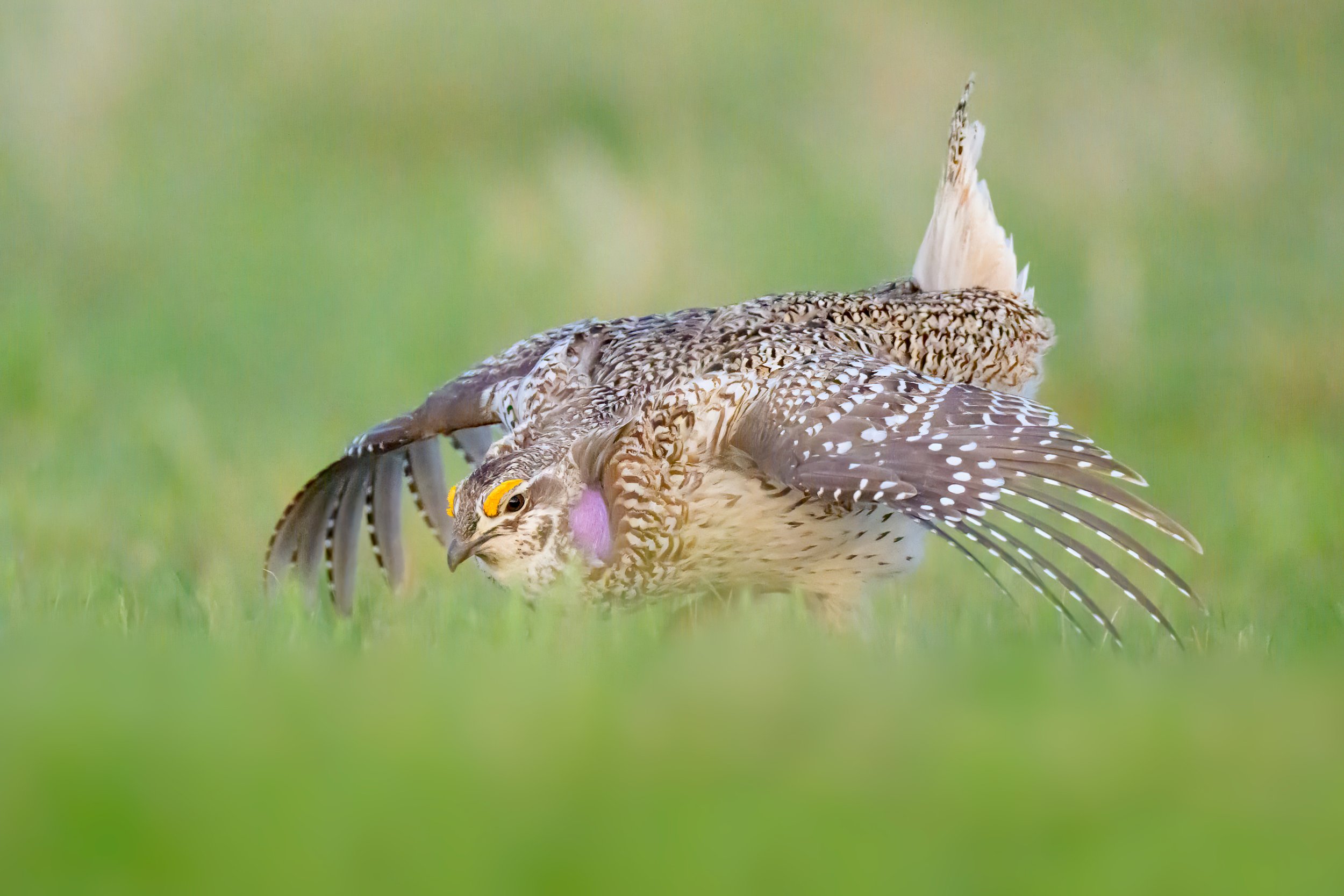
Our pivot this year was sharp-tailed grouse blinds out on the prairie.
While the peak of sharp-tailed grouse lek activity runs through April, males will continue to show up and dance right up until June. Let a single female appear, however, and you would never know you were at the tail end of the bell curve.
Sharp-tailed grouse have one of the most extraordinary mating ceremonies of any bird on Earth. They rival the western grebe rush and, in my opinion, far surpass the otherworldly displays of greater sage grouse. Congregating on predictable leks, these birds spend weeks on end dancing and fighting for all the world to see.
When a female approaches, she tends to pick out the best dancer and most dominant male on the lek. The other males rush over and create a ring around them.
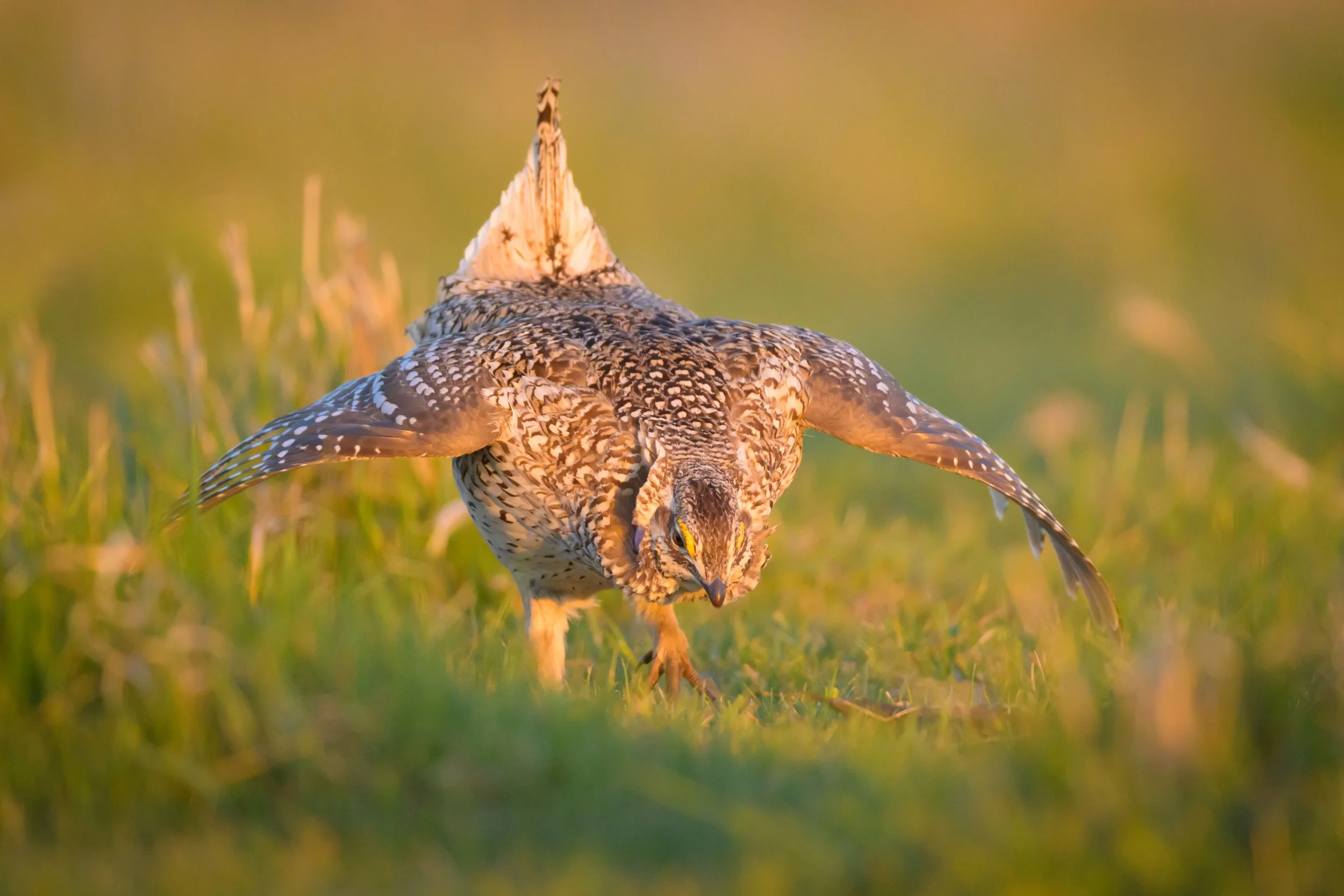
The dominant male starts the dance. Lowering himself into a hunched position, he flares his wings out beside him, lifts his white flag of a tail into the air, and begins to stomp his feet so fast the human eye can’t count them. Their footfalls happen at the same rate as a western grebe's steps when sprinting across the surface of the water: twenty per second. For the sharpie, as they are called across the West, this is so fast it creates an almost mechanical purring sound, similar to a camera firing at 20 frames per second with the shutter sound turned down a notch.
Once the dominant male starts the dance, the ring of other males begins to dance as well. As they stomp and shake their tail feathers, they spin in circles. The effect is a ring of birds each spinning individually, all dancing together, in the craziest game of “red-light, green-light” or Simon Says you have ever seen.
I hadn’t told anyone this would be the backup plan. I wanted it to be a surprise. And several participants pulled me aside afterward and told me it was the highlight of the workshop.
I have spent a lot of time sitting in grouse blinds across the West. Sometimes it was because I love watching the prairie come alive around me at dawn. Other times it was because I was on assignment for a magazine or working with the Nature Conservancy. I can’t count the number of times people have asked me to bring them along, to set up a workshop around these leks. Honestly, this was the first time I brought clients out into a blind like this before sunrise. I had always wondered whether people could keep still and sit patiently for several hours, and whether they would find the experience worth it. After the feedback from participants this year, however, I have decided to add a new workshop to the calendar that combines custom photography blinds at greater prairie chicken and sharp-tailed grouse leks with floating blinds during the peak of the waterfowl migration in the Prairie Potholes Region.
In my opinion, this month was a huge success. We photographed rushing western grebes and eared grebes in their penguin dance. We had northern pintails and redheads galore. Folks had the opportunity to photograph white pelicans with perspectives that made them look like giant dinosaurs. There were the yellow-headed blackbirds, snow geese, and one particular Canada goose family with 18 goslings swimming in a row. We captured ducks in flight, black terns, and the shockingly beautiful Franklin's gull with that soft splash of pink across their chest. And of course there were the sharp-tailed grouse, frame filling and all around us at sunrise. The list of species is too long to spell out here. But at the end of the day it is not about lists. It is about experiences. And for me, this May on the prairie was one I will not forget.
Are you interested in joining us in 2027 for our floating blind workshops in the Prairie Potholes?