Epic Eagles of Alaska
In February, when the great silence of winter still holds the north, Kachemak Bay becomes a gathering place. Here, where mountains rise stark and white from waters that refuse to freeze, the eagles arrive. They come by the thousands, drawn by the two great engines that drive all animal behavior: food and reproduction. The bay, one of the last holdouts of open water as winter tightens its grip on Alaska, offers both in abundance.
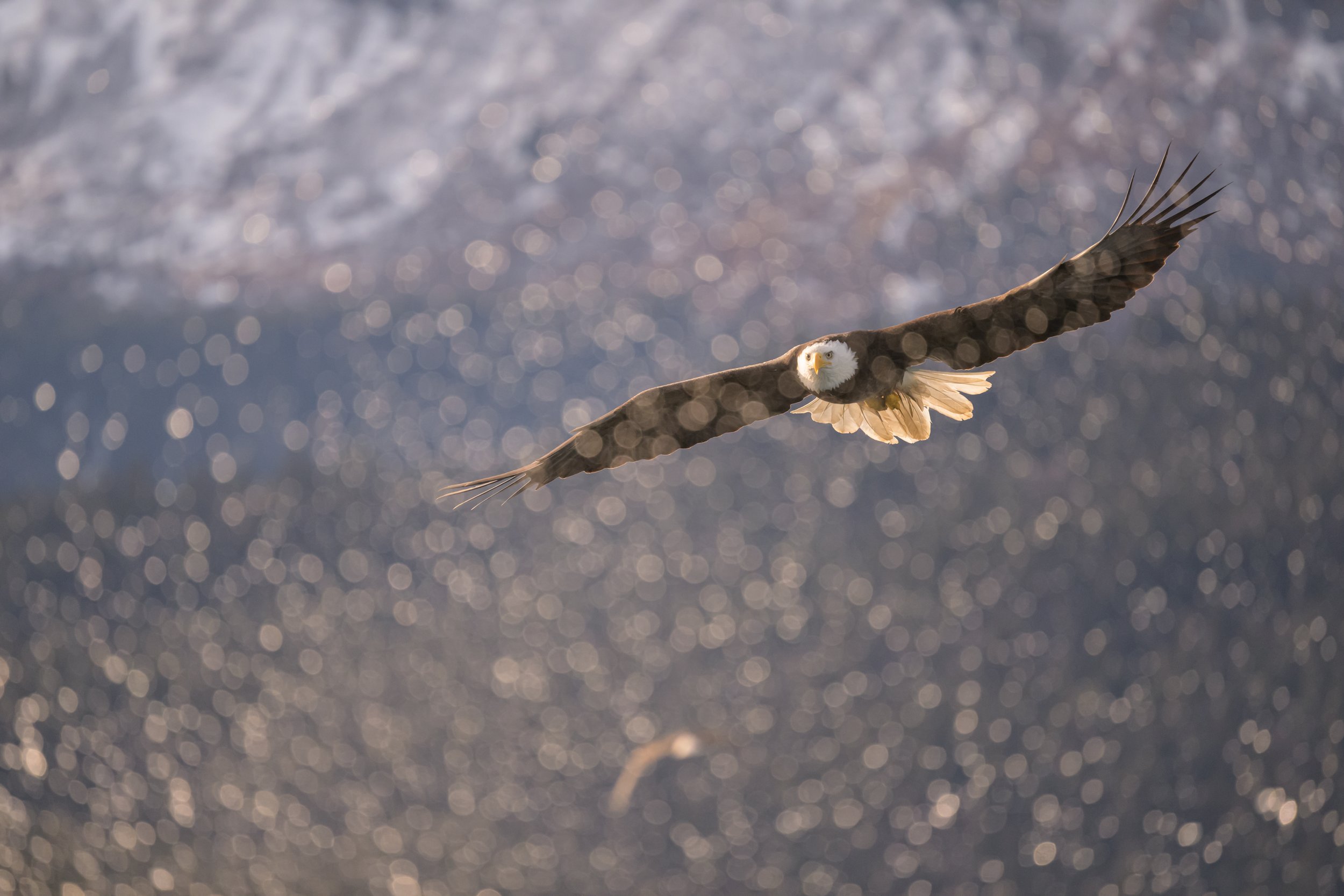
This isn’t called Epic Eagles without reason. At times you may find yourself surrounded by a hundred of these raptors, their white heads stark against dark wings. They soar, they fight in midair tumbles, they perch in snow-laden spruce waiting with the patience that only a predator can afford. They plunge toward the surface, striking fish from the water in explosions of spray right before our lenses. All of this against a backdrop of peaks that seem to exist outside of geologic time. These mountains are young by planetary standards, still rising, still being carved by the very glaciers that feed the extraordinary productivity of these waters.
The biological richness of Kachemak Bay is not accidental. Tidal currents and glacial melt create conditions that support massive populations of fish, which in turn support everything else: harbor seals with their dark, knowing eyes, sea otters methodically cracking urchins on their chests, harlequin ducks in their baroque plumage working the tide line, long-tailed ducks rafting in deeper water. This is an ecosystem operating at full throttle, and the eagles know it. They have known it for thousands of years.
The birds gather here waiting for breakup, that moment when ice begins to fracture and retreat from the inland lakes and rivers where they nest. In the parlance of Alaska, breakup is not a metaphor. It is the literal shattering of winter's hold, the moment when water remembers it was once liquid. The eagles reunite here with lifelong mates, pairs bonded through decades of shared nesting duties, and they wait. Evolution has tuned their internal clocks to this pause, this gathering, this moment between migration and the demands of the breeding season to come.
For five days we will work with these birds. You will learn to read wind direction and light direction, to understand how eagles position themselves for hunting based on thermal currents, to anticipate behavior by watching the subtle shifts in posture that signal intent. This is truly a master class in flight photography, but it is also an education in ethology (animal behavior), ecology, and phenology (the timing of natural events).
The Basics
Dates:
February 21 - 28, 2026
Cost: $6500
Deposit: $2000
Single Supplement: Included
Included:
Classroom Session
5 days on boats
All lodging in single rooms
Airport: Ted Stevens International Airport. ANC. Anchorage, Alaska.
Location: Homer, Alaska
Skill Level: Beginner to Advanced
Physical Difficulty: Easy


Experience Highlights
North America’s premier eagle photography hotspot
Unparalleled access and opportunities to photograph these extraordinary birds of prey
This workshop will be a MASTER CLASS in birds in flight photography
One-on-one photography instruction
Learn about the ecology and behavior of bald eagles while filling memory cards each day
Other potential wildlife subjects: short-eared owls, sea otters, Stellar sea lions, harlequin ducks, long-tailed ducks, various species of scoters, and harbor sealsoose, otters, ermine, long-tailed weasels, endangered Rocky Mountain trumpeter swans, golden eagles, bald eagles, boreal owl, northern pigmy owl, coyotes, and more.
Alaska Itinerary
Day 1:
Arrive in Homer, Alaska. There are several ways you can find your way down to Homer from Anchorage. You can drive, take the bus, or fly. If you drive, you will discover one of the most beautiful landscapes you have ever experienced in the winter as you make your way across the Kenai Peninsula. If you want the easy and fastest way, Northern Pacific Airways makes regular non-stop 50 minute flights to and from Homer from Anchorage throughout the day. Check-in at the hotel is 3pm and once settled, we will meet for happy hour and dinner before a briefing on the week to come.
Day 2:
The following day we will be spent indoors talking shop. This is a photography workshop, not a tour. So, everything about this trip is designed to help you improve your photography. For this reason, the first day will be spent in a classroom like setting where we will discuss skill sets we believe to be critical for your success. Here we will discuss autofocus strategies for birds in flight, exposure considerations for snow, low light photography, and composition - amongst other things. We guarantee your workshop will be significantly more productive after spending this one classroom day with us refining the skills necessary for getting the most out of your trip to photograph bald eagles.
Days 3-7:
The next five days will be spent working from both boats and land to photograph bald eagles. Each day will be split in half with a morning session and an evening session in the field. Days are relatively short up in Alaska this time of year but we will still end up with about 8 hours of photography a day.
Day 8:
On the last day of the workshop, everyone heads back to Anchorage. If you wish to book flights out the same day, we recommend doing so after 2pm to account for any delays in travel back to Anchorage.


Workshop Leaders:

Jared Lloyd has been a working professional wildlife photographer for twenty years and is the founder of PhotoWILD Workshops and PhotoWILD Magazine. Jared lives in Alaska, making this workshop in his backyard. www.jaredlloyd.com